
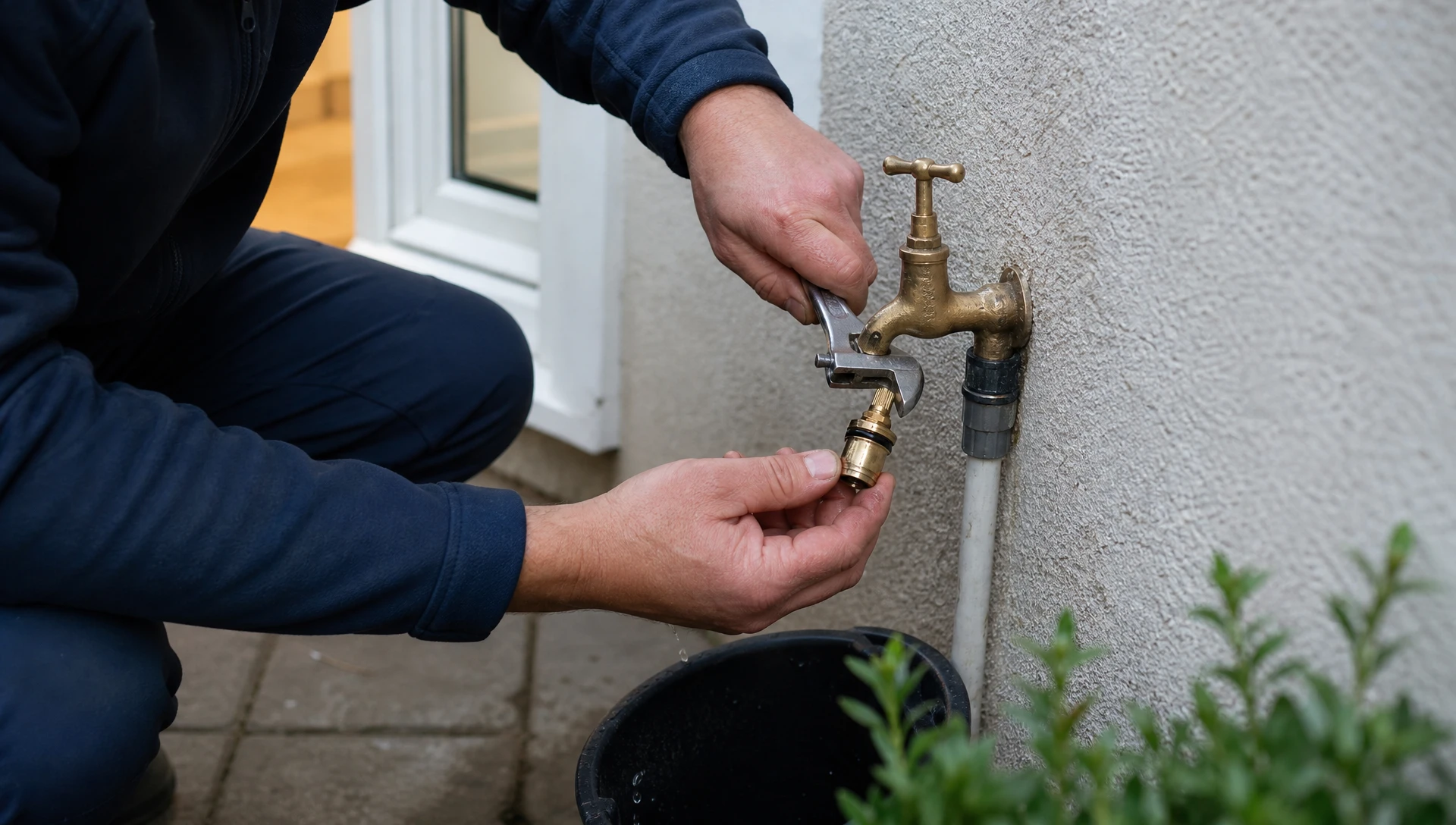
Monobloc Tap Repair
A monobloc tap is the common single-hole mixer tap fitted to many kitchen and bathroom basins. Hot and cold supplies come up through one body, with either one lever or two controls built into the same unit. When it starts dripping, feels stiff, or leaks from the base, the fault is often inside the cartridge, valve, seals, or fixing set rather than in the pipework.
It is worth getting it looked at when the drip is constant, the handle is getting harder to move, or water is appearing under the sink. A small leak can mark worktops, swell units, and waste more water than most people expect. Leaking Tap Repair Liverpool handles repairs to mixer and traditional taps across Liverpool, including Mossley Hill, and can also deal with taps that will not shut off at all.

Monobloc Tap Replacement
In many cases, Monobloc Tap Replacement is not the first step. A lot of faults come down to a worn cartridge, a failed seal, or a loose fixing kit, and those can often be repaired without changing the whole tap. If the tap body is sound and the controls are not badly worn, repair is usually the sensible place to start.
Replacement becomes more likely when the tap body is cracked, badly corroded, or has worn internally to the point where parts no longer seal properly. Another common reason is repeated repair history: if the same tap has had several internal parts changed and still leaks or binds, fitting more parts can stop being good value. A loose tap on the sink can also point to worn mountings underneath, and sometimes the condition of the tap and fixings together makes a fresh unit the better answer.
A proper visit should include checking the condition of the body, spout, tails, and any isolation valves before deciding. Leaking Tap Repair Liverpool gives a clear quote before work starts and can advise whether your existing tap is worth saving or whether replacement is the cleaner option.
Monobloc Tap Valve Replacement
With older taps, Monobloc Tap Valve Replacement can be straightforward or awkward depending on what is inside. Some monobloc taps use standard cartridges or ceramic valves that are easy enough to identify once the handle is off. Others use less common internals, and that is where matching the right part matters.
The problem with older or discontinued taps is rarely the idea of replacing a valve; it is finding one with the correct length, spline pattern, diameter, and opening direction. Two parts can look close enough on the bench and still not seat properly once fitted. That leads to poor shut-off, stiff movement, or a handle that no longer lines up.
For that reason, a careful strip-down and measurement is usually needed before any part is chosen. Where possible, suitable parts can be matched for taps that are no longer current. If a correct match cannot be found, it is better to say so than to force in a near fit that will fail early. At that point, replacing the tap may be the more practical route.
If you want someone to inspect it first, Leaking Tap Repair Liverpool can be contacted on 07496 477 866 or at [email protected]. They also deal with isolation valve issues if the supplies below the tap need attention before any internal work can be done.
Monobloc Tap Leaking
A Monobloc Tap Leaking fault usually comes from one of a small number of internal problems. The common ones are a worn washer, a damaged valve seat, or a failing cartridge. Which of those applies depends on the design of the tap.
On older washer-based taps, the rubber washer compresses against a seat to stop the water. Over time the washer hardens, splits, or wears unevenly. That leaves a drip from the spout even when the tap feels shut. If the brass seat it closes against has become rough or scored, fitting a new washer alone may not cure it for long.
Many monobloc taps use ceramic cartridges rather than traditional washers. Inside the cartridge are sealing surfaces and ports that line up as you move the handle. Once those surfaces wear, scale up, or crack, the tap may drip, become stiff, or leak around the handle. A cartridge fault can also cause poor control between hot and cold.
Not every leak comes from the outlet. Water around the base of the tap can mean failed O-rings on the spout, a leaking joint inside the body, or water tracking down from above and collecting around the mounting hole. A damp cupboard below can point to flexible tails, connections, or the tap body itself.
The right repair depends on seeing where the water starts, not just where it ends up. Leaking Tap Repair Liverpool repairs dripping, leaking, and stiff taps in homes and small businesses, and can attend emergency cases where a tap will not turn off. To book a visit, call or WhatsApp 07496 477 866, or email [email protected].