
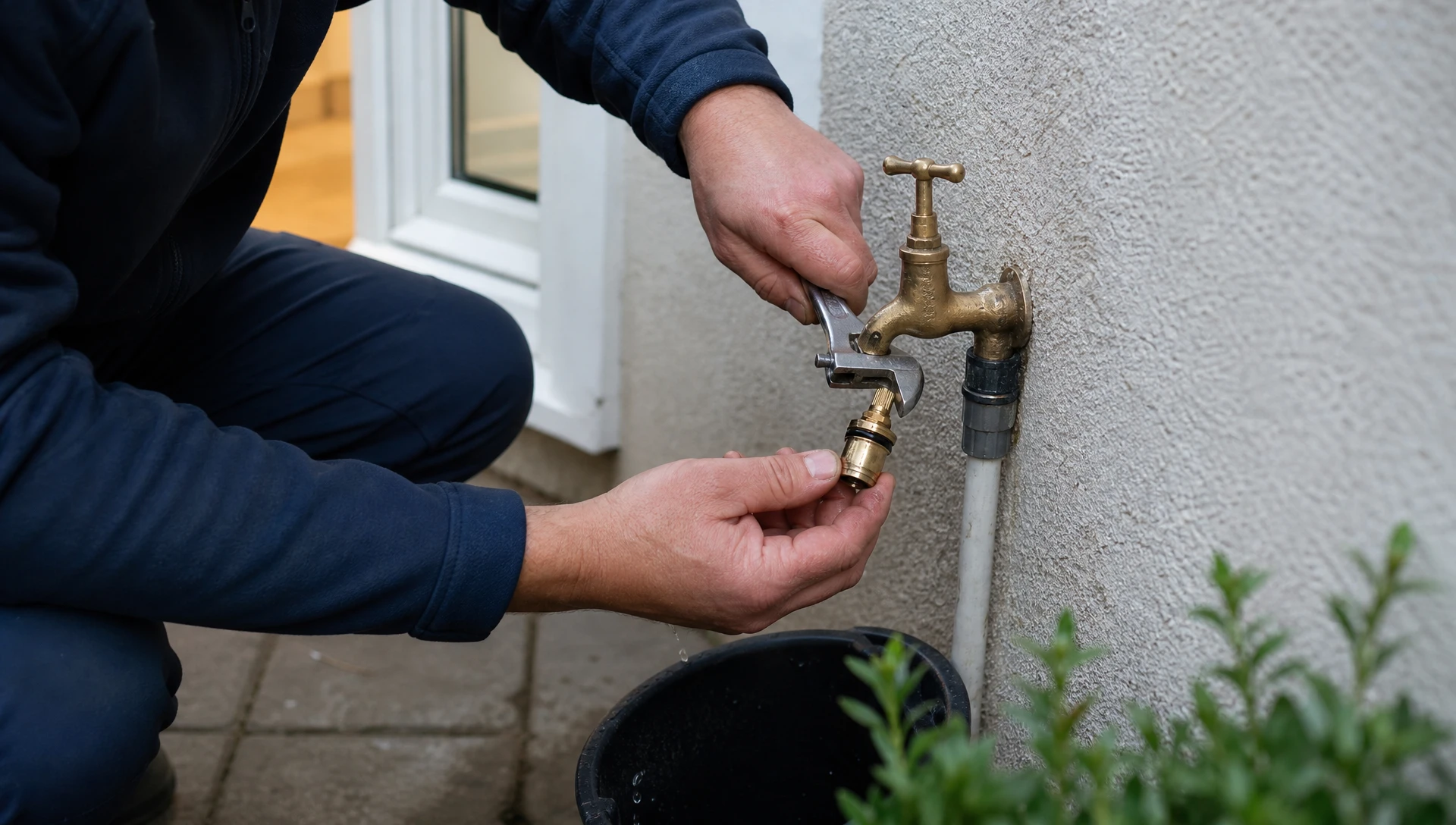
Ceramic Disc Tap Repair
Ceramic disc taps use a cartridge with two hard discs that slide against each other to open and close the water flow. You see them on many modern mixer taps with a single lever, but some twin-handle taps use ceramic valves as well. They are reliable parts, though not immune to wear, limescale, or damage inside the body of the tap.
A slow drip can often be ignored for a while, but a ceramic disc fault tends to get worse rather than better. The lever may stiffen, the tap may not shut off cleanly, or the cartridge may start passing water internally. If the tap is awkward to use, keeps dripping after being turned off properly, or will not isolate cleanly, it is usually worth having it repaired rather than forcing it and risking a snapped handle or damaged tap body.
Leaking Tap Repair Liverpool deals with dripping, leaking and stiff taps across Liverpool, including Kensington. For advice or a visit, you can get in touch on 07496 477 866 or [email protected].

Ceramic Disc Tap Replacement
With Ceramic Disc Tap Replacement, the aim is to change the working part inside the tap rather than replace the whole fitting. In a mixer tap, the cartridge controls both flow and temperature. Instead of a rubber washer compressing onto a seat, the ceramic discs line up and shut off the water through precision-made openings.
That difference matters. On an older traditional tap, a worn washer is often the first suspect. On a ceramic disc mixer, a washer change is usually not the cure because the seal happens inside the cartridge. If the discs are scored, the internal seals have failed, or the spindle is worn, replacing the cartridge is the normal repair.
The job starts with isolating the water and removing the handle carefully. Some handles are fixed by a grub screw, some by a hidden retaining screw under a cap. Once the trim is off, the cartridge can be identified by its size, spline pattern and fixing points. Matching the part matters. A cartridge that is only slightly different may fit badly, leak, or leave the handle out of line.
Sometimes replacement is straightforward. In other cases, scale locks the cartridge into the tap body and it needs freeing without twisting or cracking the casting. If a tap is too corroded, or if the correct part cannot be matched sensibly, a full tap replacement can be the better option.
Ceramic Disc Tap Valve Replacement
A lot of calls for Ceramic Disc Tap Valve Replacement come from taps that have become hard to turn or that still drip after somebody has already tried a washer. Those are strong signs the fault is in the cartridge or valve unit rather than in a simple rubber seal.
A stiff lever often points to scale build-up around the cartridge stem, failing internal seals, or wear inside the mechanism. You may notice the handle getting tighter over weeks, then suddenly feeling rough or notchy. Forcing it does not help. That can damage the handle fixing or shear the spindle.
Another common pattern is a tap that was repaired with a washer swap but carries on dripping. If the tap is ceramic disc by design, changing a washer will not address worn discs or a damaged cartridge seal. Twin-handle ceramic taps can be misleading here because they look more traditional from the outside.
There are also cases where the valve does shut off, but only if you over-tighten the handle. That usually means the internals are no longer sealing cleanly. Replacing the valve restores the proper stop point so the tap closes without excessive force. Leaking Tap Repair Liverpool can advise whether the part is worth changing or whether the whole tap has reached the point where replacement is the sensible spend.
Ceramic Disc Tap Leaking
A Ceramic Disc Tap Leaking fault is not always caused by the cartridge alone. It helps to pin down exactly where the water is appearing, because the repair changes depending on the leak point.
If water drips from the spout after the tap is off, the cartridge is high on the list. If water appears around the base of the handle while the tap is running, the issue may be an O-ring or seal higher up the assembly. Water gathering under the sink can come from the tails, the fixing, or the body of the tap rather than the ceramic unit itself. A proper diagnosis saves changing the wrong part.
Debris in the water line can also stop ceramic discs sealing properly. After plumbing work or a mains interruption, small particles sometimes lodge inside the cartridge and cause a fresh drip. In some cases flushing and refitting will help, but many cartridges are better replaced once they have been disturbed and found to be worn.
Access is often the part that takes time. Basin taps can be cramped underneath, and seized backnuts or perished isolation valves can turn a simple cartridge job into a wider repair. Where needed, isolating valves can be fitted or replaced so future maintenance is easier. Clear prices are given before work starts, and the aim is to complete the repair on the visit where possible with the water back on before leaving.
For kitchen, bathroom and utility taps in homes and small businesses, contact Leaking Tap Repair Liverpool on 07496 477 866. WhatsApp is on the same number, and email is [email protected].