
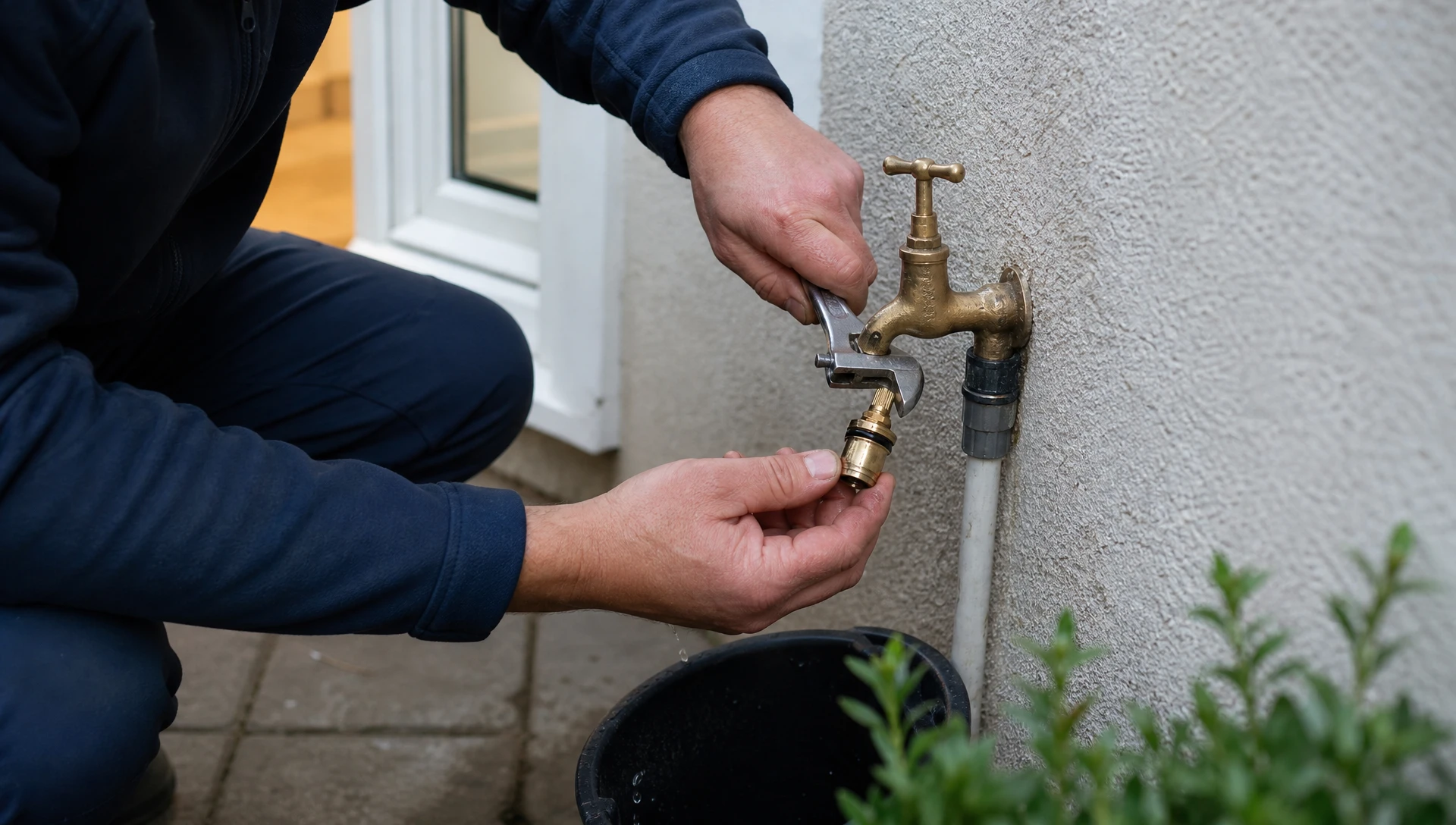
Basin Tap Repair
A basin tap that drips, seeps around the base, or turns stiffly is usually repairable. The common failures are small internal parts: a washer, ceramic cartridge, O-ring, or the seating the washer closes against. Left alone, a slow drip wastes water and often turns into a handle that gets harder to use or a leak under the basin.
It is worth calling someone once the tap is no longer shutting off cleanly, water is appearing around the handles, or access under the basin is awkward. Basin taps often sit in tight vanity units where isolation, dismantling and refitting take longer than the tap itself. Leaking Tap Repair Liverpool handles these faults across Liverpool, including Belle Vale, and can advise whether a repair is sensible or whether replacement is the better use of money.
For bookings or advice, get in touch with Leaking Tap Repair Liverpool on 07496 477 866, WhatsApp on the same number, or email [email protected].

Basin Tap Replacement
There are plenty of cases where Basin Tap Replacement makes more sense than repairing the existing tap. If the body of the tap is corroded, the fixing studs are badly worn, the spout is loose in the casting, or the threads are damaged, changing internal parts will not cure the underlying problem. The same applies where an old tap has been repaired several times and is still stiff, noisy, or leaking from more than one point.
A straightforward repair is often worthwhile when the tap is otherwise sound and the fault is limited to a washer, cartridge, valve insert or seal. Traditional pillar taps with solid bodies are often good candidates. Many mono basin mixers are also repairable if the cartridge can be identified and removed without damaging the body.
Replacement becomes the practical option when parts cannot be matched, when the tap has seized internally, or when the cost of labour and parts would come close to fitting a new one. Leaking Tap Repair Liverpool can look at the condition of the tap, explain the likely repair, and give a clear quote before any work starts. If a basin tap is beyond an economical repair, full tap replacement can be carried out instead.
Basin Tap Valve Replacement
In many repairs, Basin Tap Valve Replacement is the key job rather than replacing the whole tap. On traditional basin taps, the valve is the internal mechanism the handle turns to raise and lower the washer. On ceramic quarter-turn styles, the working part is usually a ceramic valve or cartridge insert. Once that part wears, the tap may drip, become stiff, or fail to shut off properly.
Older taps can be more awkward. Some use valve heads that are no longer common, and dimensions vary between manufacturers. Splines, thread sizes, body depth and washer carrier design all need to match, otherwise the new part may not seat correctly or the handle may not fit back on. That is why these repairs often take more than a quick guess based on appearance.
With discontinued taps, matching parts is sometimes possible and sometimes not. A repairer will usually remove the old valve, measure it, and compare the thread and seating arrangement before fitting anything. If the valve seat inside the tap body is damaged as well, a new valve alone may not stop the drip. In those cases, the sensible choice may shift from a part swap to replacing the tap itself.
Basin Tap Leaking
When a basin tap is dripping from the spout or weeping around the handle, Basin Tap Leaking is usually caused by wear in the shut-off parts. In a traditional tap, the washer hardens or splits and no longer seals against the valve seat. In a ceramic mixer, the cartridge can wear internally or crack, which stops the tap closing fully. Around the spindle or handle, a tired O-ring or gland seal often lets water creep out during use.
The valve seat matters as much as the washer. If that metal seating has become scored or pitted, a fresh washer may still leak because it is trying to seal against a rough surface. Scale can make this worse, especially where a tap has been dripping for a while and has been overtightened to compensate. That extra force often speeds up the wear.
Not every leak is from inside the tap. Water around the base can come from failed sealing at the tap tails, loose backnuts, or moisture running down from a handle leak and collecting below. Under-basin access is often limited, so proper diagnosis means isolating the supply, drying everything off, and checking where water first appears rather than where it ends up.
If a basin tap will not turn off at all, that is no longer a nuisance fault. Leaking Tap Repair Liverpool deals with dripping, leaking and stiff taps in homes and small businesses, including taps that need an urgent visit because they will not shut off. Where needed, isolating valves can be fitted or replaced so the basin can be serviced without turning the whole property’s water supply off. Tidy work matters with basin taps because everything is usually happening inside a cupboard or vanity unit, and the aim is to leave the water back on with the leak stopped.